
It Didn’t Start as a Crisis
It started as a routine issue.
A system slowed down. Staff couldn’t access key applications. Then systems went offline entirely.
Within hours, operations stalled. Transactions stopped. Customers noticed.
By the time IT identified the root cause, leadership was already involved.
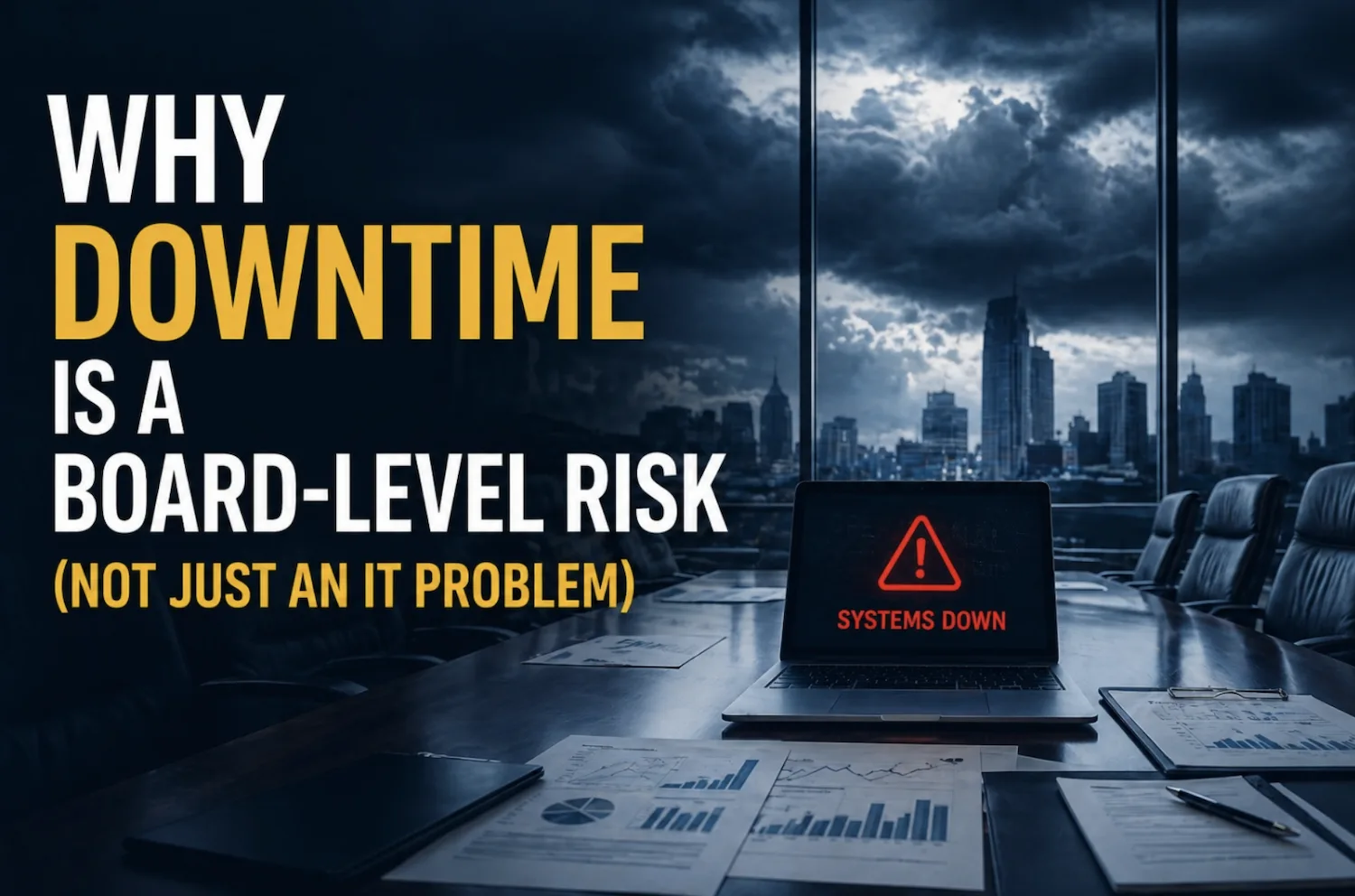
Because downtime isn’t just an IT problem anymore.
The Shift: From Technical Issue to Business Risk
Historically, downtime was treated as a technical inconvenience.
Today, it’s a business event—with financial, operational, and regulatory consequences.
When systems go down, the impact ripples across the organization:
Revenue is lost. Productivity drops. Customers lose confidence.
And in regulated industries, downtime introduces compliance risk.
Why Leadership Needs to Pay Attention
Boards and executives are increasingly being held accountable for operational resilience.
That means understanding not just whether systems are running—but how quickly they can recover when they don’t.
A key question regulators now ask is simple:
“How long can your organization afford to be down?”
If the answer is unclear—or unacceptable—that’s a problem.
The Reality Most Organizations Face
Many organizations believe they are protected because they have backups.
But backups alone don’t guarantee recovery.
Recovery depends on:
- How frequently data is captured
- How quickly systems can be restored
- Whether recovery processes are tested
The Gap Between Expectation and Reality
A common disconnect exists between leadership expectations and IT capabilities.
Executives assume recovery will be fast. IT teams know the process is slower and more complex.
This gap creates risk.
In one case, a financial institution expected recovery within hours—but actual restoration took over a day due to incomplete testing and manual processes.
The result wasn’t just downtime—it was lost trust.
Building True Resilience
Resilience isn’t about preventing every issue. That’s unrealistic.
It’s about minimizing impact.
Organizations that handle downtime well invest in:
- Automated, frequent backups
- Rapid recovery capabilities
- Regular testing of recovery plans
- Clear communication protocols
These elements turn disruption into a manageable event—not a crisis.
The Takeaway
Downtime is no longer an IT metric.
It’s a business risk, a compliance issue, and a leadership responsibility.
The organizations that recognize this early are the ones that recover faster—and maintain trust when it matters most.
0 Comments