
What “Layers of Security” Actually Mean (and Why One Tool Is Never Enough)
You’ve probably heard IT companies say:
“You need layered security.”
But what does that actually mean?
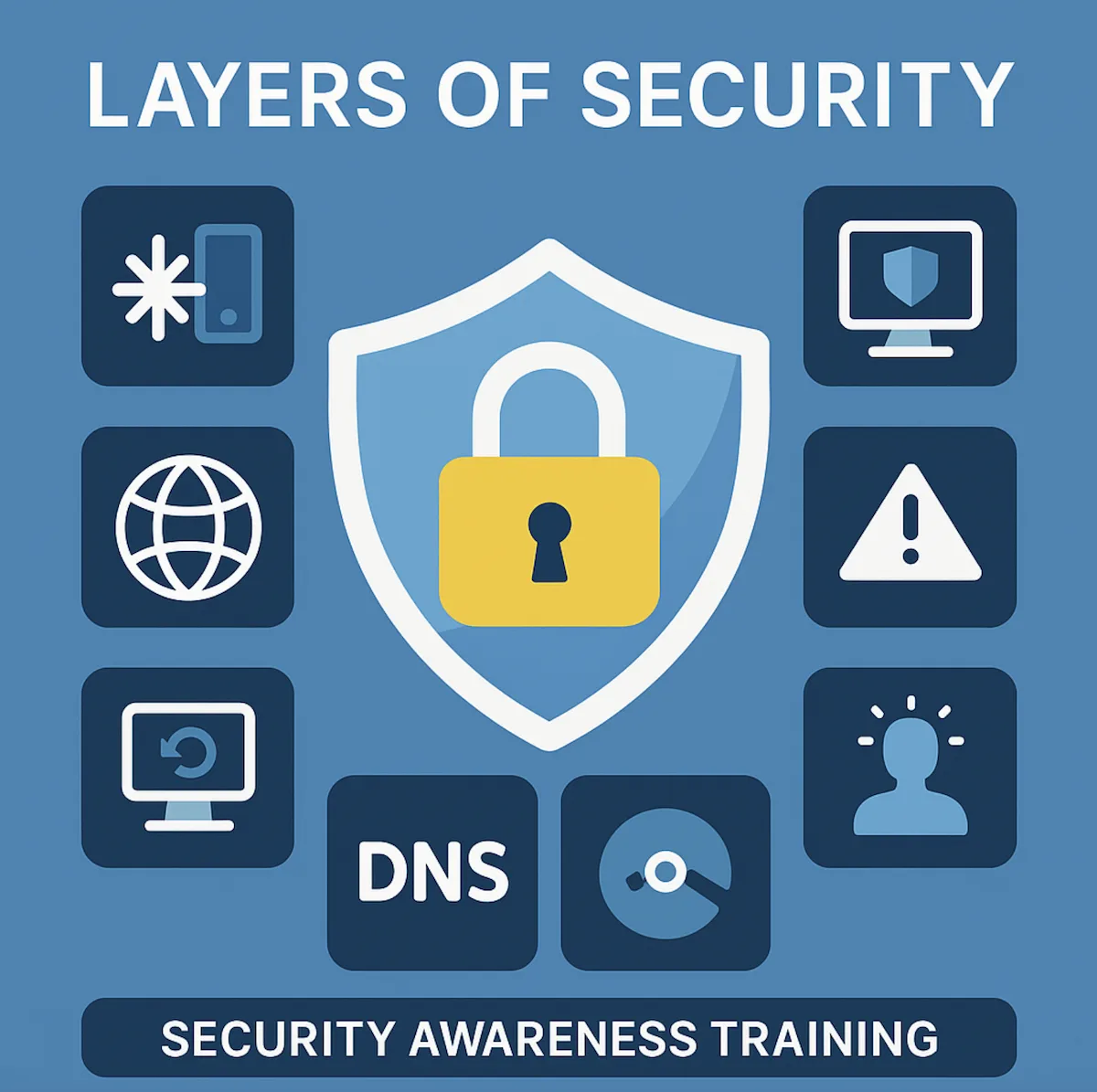
Let’s break it down in simple terms using the same layered model covered in our Building a Strong Defense reference materials.
Why Layers Matter
Think of cybersecurity like your home security system:
- One lock isn’t enough
- You need multiple protections
- Each layer covers weaknesses in another
Cybersecurity works the same way.
No single tool stops every threat.
But multiple layers working together dramatically reduce risk.
The Core Layers (Explained Simply)
- Firewall
Your front door. It blocks unwanted traffic from getting in. - Complex Passwords
Strong, unique passwords prevent attackers from guessing their way in. - Multi-Factor Authentication (MFA)
This is the second lock on the door. Even if someone steals your password—they still can’t get in. - Endpoint Security
This protects each device—laptops, desktops, tablets—from threats. - Web Filtering
Stops employees from accidentally landing on dangerous sites. - DNS Protection
Stops malicious websites before they load. - Email Security
Filters out phishing messages and dangerous attachments. - Backup & Disaster Recovery
If all else fails, this lets you restore everything and keep running. - Security Awareness Training
Your team becomes your first line of defense instead of your biggest risk.
And finally… - Cyber Insurance
Your financial safety net if something goes wrong.
These layers work together to create a secure, resilient environment—one strong enough for banks, credit unions, and healthcare organizations.
Why One Layer Isn’t Enough
Imagine having:
- A firewall
- But weak passwords
- Or backups
- But no email filtering
Attackers only need one weakness. Layers make sure you don’t have any.
Final Thought
Layered security isn’t expensive or complicated when done right—it’s simply a collection of smart, modern protections that work together.
If you’re not sure what layers you currently have, we can help you find out.
0 Comments