
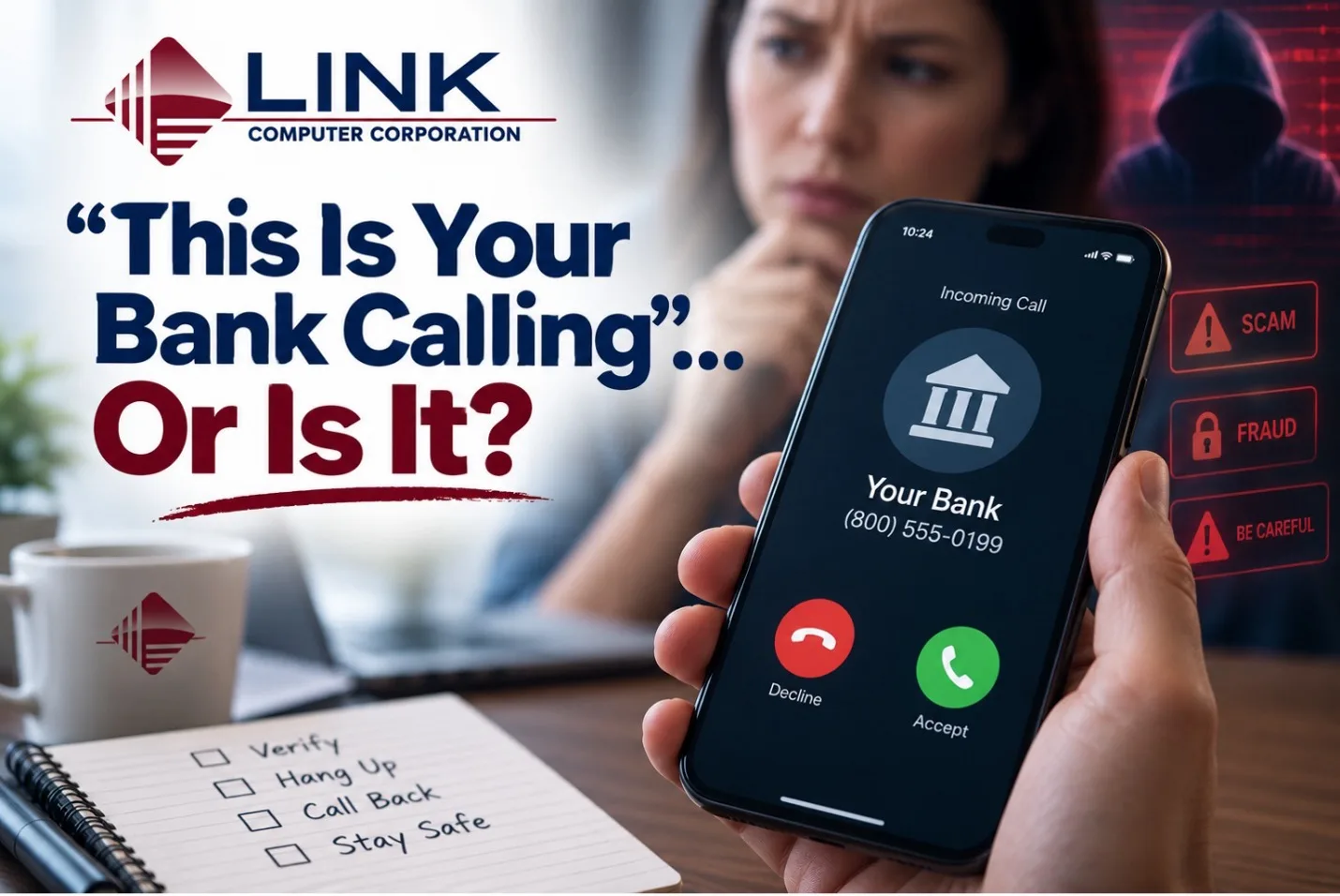
Your phone rings.
The caller ID displays the name of your bank. The person on the other end knows your name and says there has been suspicious activity on your account.
They need to verify a few things.
It sounds legitimate. More importantly, it feels urgent.
And that combination can be very convincing.
Bank impersonation scams take advantage of something financial institutions work hard to earn: trust. Criminals may pretend to represent a bank or another familiar organization because they know people are more likely to respond when their money appears to be at risk.
Knowing how these scams work can help you recognize one before you act.
Caller ID Doesn’t Prove Who Is Calling
We tend to trust the name or telephone number displayed on our phones. Unfortunately, technology can allow scammers to make a call appear to come from a number other than the one they are actually using.
The same principle applies to text messages and email.
A familiar logo, company name, telephone number, or professional-looking message should never be the only reason you trust an unexpected communication.
Pay attention to what the person is asking you to do.
Scammers Create a Problem They Can “Help” You Solve
A common impersonation scam begins with alarming news.
Someone has accessed your account. A suspicious purchase was detected. A transfer is being processed. Your debit card has been compromised.
The caller may tell you that immediate action is required to prevent financial loss.
That urgency is deliberate.
When we’re worried about losing money, we’re more likely to focus on solving the problem quickly rather than questioning the person offering the solution.
A caller might ask for personal information, an account password, a verification code, or instructions related to moving money. They may even tell you not to speak with anyone else because doing so could interfere with an “investigation.”
Those are reasons to stop and independently verify what you’re being told.
Hang Up and Call Back
There is a remarkably simple way to respond to a suspicious bank call.
Hang up.
Then contact your bank using a telephone number you already know is legitimate, such as the number printed on your debit or credit card, listed on your statement, or published on the bank’s official website.
Don’t rely on a telephone number provided by the caller, text message, or suspicious email.
If there really is a problem with your account, your bank can help you address it. If there isn’t, you may have just prevented a scam.
The same approach works with other organizations. If someone unexpectedly contacts you claiming to represent a business or government agency, find the organization’s legitimate contact information yourself and verify the request.
Be Careful with Security Codes
One particularly convincing scam can occur when a caller causes a real security code to be sent to your phone.
That can make the conversation seem legitimate.
In reality, the scammer may be attempting to log into your account and has reached the point where the system requires additional verification. They need the code that was sent to you.
Never provide an unexpected caller with a one-time security or authentication code.
If you receive a code for an account you weren’t trying to access, contact the organization through a trusted channel.
Protecting Yourself Doesn’t Require Technical Expertise
You don’t need to understand how telephone spoofing works or know the technical details behind a cyberattack.
You simply need a reliable habit.
When an unexpected call, email, or text asks you to provide sensitive information or take financial action, slow the conversation down. Don’t let urgency make the decision for you.
End the interaction and independently contact the organization.
And remember, there is nothing rude about hanging up on a caller when you are uncertain. A legitimate organization will understand that you want to protect your information.
0 Comments