
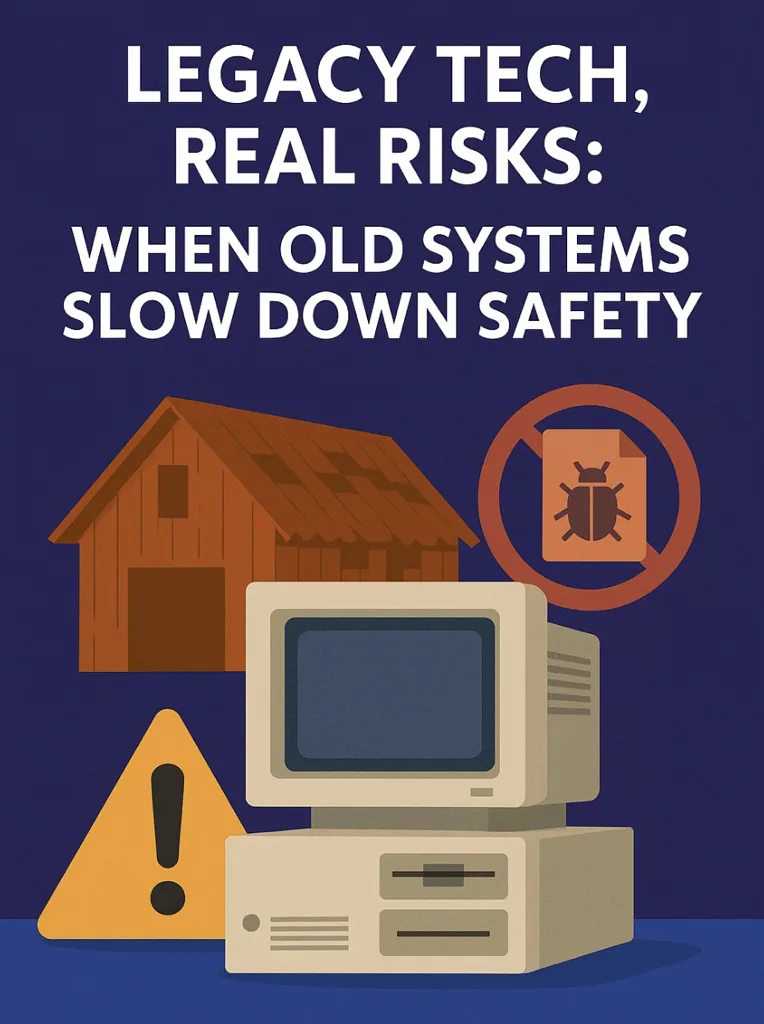
There’s a reason they call it technical debt. Old systems may still run, but they’re often patched together like an old barn roof—one storm away from real damage.
The Cost of Complacency
Community banks often rely on core systems that have served faithfully for decades. But here’s the risk: outdated platforms can no longer support modern controls or integrate with newer tech.
Consequences of legacy drag:
- Security vulnerabilities due to unsupported software
- Incompatibility with new fintech tools or mobile apps
- Higher maintenance costs over time
- Difficulty attracting tech-savvy customers or employees
Signs It’s Time to Act
If your core systems:
- Require workarounds for basic tasks
- Can’t support multi-factor authentication
- Aren’t cloud-ready or API-compatible
- Depend on one or two aging staff members to operate…
…it may be time to re-evaluate.
Your Modernization Roadmap
Modernizing doesn’t mean a complete rip-and-replace. Start small and strategically:
- Assess your tech stack – Create a full inventory
- Categorize systems – Mission critical, maintenance mode, or retirement-ready
- Prioritize replacements – Focus on functions that directly impact customer experience and risk
- Plan phasing – Spread costs and disruption over time
Run a core system audit with your IT and operations teams. Label each system as:
- Mission Critical
- Maintenance Mode
- Retirement-Ready
Then, start conversations about replacement timelines and budget.
Because, an old engine might get you there—but it might also break down when you need it most.
0 Comments